
extended universe
practical world-building with Homer Hill

Welcome back to Open Studio! I’m so grateful to have you as a reader during these first few months of writing. As we head into 2025, I’m excited to share a few upcoming projects, including an expanded version of my course, Ableton Open Studio FOUNDATIONS, a separate course focused on songwriting, and some original music of my own. As always, I’d love to hear your feedback or topic suggestions—just hit reply anytime.
On the subject of incorporating other voices, today’s issue comes from a guest writer: my dear friend Homer Hill, a writer, skateboarder, video maker, and digital marketer based in Provence, France. This piece grew out of our conversations about how building imaginary worlds can inspire creativity and shape an artist’s identity. One of my favorite things about this essay is how Homer’s field of reference differs from my own—who knew Iron Maiden would ever make an appearance here? In any case, I’m thrilled to share his thoughts with you.
Here’s Homer Hill:
How Visual Branding and World-Building Can Drive Your Musical Creativity
A fascinating aspect of being an artist is the ability to create entire worlds—a practice that transforms music from mere sound into immersive, multidimensional experiences.
For the DIY creative producer grappling with creative fatigue or block, visual branding, world-building, and storytelling can act as powerful tools to reignite the imagination and sustain long-term creative output. These methods not only enrich the artistic process but also provide a framework for cohesive aesthetic direction. Looking at the careers of artists like David Bowie, the Misfits, Iron Maiden, Wu-Tang Clan, and Dean Blunt, we can see how constructing complex artistic worlds has fueled their prolific output.
The Lighthouse
Visual branding is the cornerstone of world-building, serving as a guiding aesthetic principle that shapes an artist's output. Whether it’s Ziggy Stardust’s glittered alien persona or the macabre skull imagery of the Misfits, these visual elements operate as signposts in the creative journey.
David Bowie was a master of this, evolving his image with each album to reflect his latest artistic focus. Ziggy wasn’t just a character; it was a fully realized mythology of an alien rock star descending to Earth to save humanity. This character allowed Bowie to explore themes of fame, identity, and alienation. In an interview with Rolling Stone, Bowie remarked, "Ziggy was this kind of grand experiment. I built a world I wanted to escape to, and it fed everything—the costumes, the lyrics, the stage shows. Once I was inside that world, the songs came effortlessly."
For the Misfits, their distinctive horror-punk branding—complete with their crimson skull logo and macabre album art—became the anchor for their musical themes. Frontman Glenn Danzig embraced an aesthetic inspired by B-movies and comic books, which not only shaped their lyrical content but created an iconic, enduring identity. By embodying their own mythology, the Misfits transformed their music into a cultural artifact that extends beyond sound.
Creative Fertilizer
World-building is not just about creating a backstory or a setting—it’s about inhabiting that world so fully that every artistic decision springs naturally from its logic. Iron Maiden’s Eddie, the undead mascot, is a quintessential example of this. Eddie isn’t just a marketing gimmick; he’s a dynamic character who grows and evolves with each album, often serving as a visual representation of the band’s themes. From ancient Egypt on Powerslave to dystopian futures on Somewhere in Time, Eddie’s presence allows Iron Maiden to explore new thematic landscapes while staying true to their identity.
The Wu-Tang Clan, on the other hand, built a world rooted in the mythology of martial arts films. Their albums aren’t just collections of songs; they’re tapestries of interconnected characters, stories, and symbols. RZA once explained in an interview, “We were creating a universe based on kung-fu flicks and street life. Wu-Tang became our way to mythologize our reality and give it epic meaning.” By blending these disparate influences, they cultivated a vast creative playground that extended to solo albums, films, and even comic books.
Storytelling
Storytelling is the thread that binds visual branding and world-building together. It transforms abstract concepts into relatable, emotionally resonant experiences. Without storytelling, branding risks becoming superficial, and world-building can feel disjointed.
Take Iron Maiden’s “The Rime of the Ancient Mariner,” a 13-minute epic based on the Samuel Taylor Coleridge poem. By grounding their music in literary storytelling, they elevate their work beyond typical heavy metal tropes, crafting a piece that’s cinematic and immersive.
Wu-Tang’s storytelling thrives on its collaborative nature. Each member’s persona contributes to the broader saga of the Clan and remains in dialogue with the world they’ve created. This collective storytelling keeps their mythology fresh and expansive, allowing them to produce a staggering volume of work, all stylistically unified by common threads.
The Anti-Brand
Not every artist thrives on crafting explicit narratives or mythologies. For those who don’t see themselves as fantasy enthusiasts or comic-book lovers, Dean Blunt offers an alternative path. His world-building doesn’t rely on elaborate characters or backstories—it operates in the shadows, fragmented and cryptic, inviting the audience to do the work of piecing it together.
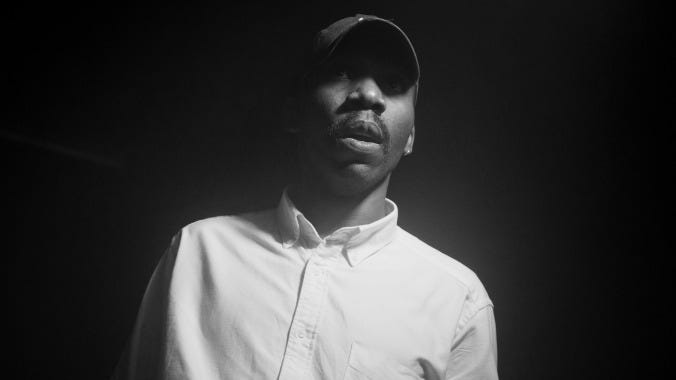
Blunt’s art blurs boundaries between music, performance, and conceptual art. His sparse visuals, enigmatic narratives, and publicity stunts create an aura of mystery that compels engagement. Unlike the heavily branded worlds of Bowie or Wu-Tang, Blunt’s approach feels deliberately incomplete, as though the world he’s building exists only in glimpses.
This ambiguity is the point. By refusing to fully explain his work, Blunt invites listeners into a space of active interpretation. His world isn’t spelled out—it’s evoked, leaving room for listeners to project their own meanings. This approach offers an important counterpoint: world-building doesn’t have to mean designing a sprawling fantasy universe. It can be as simple as crafting a mood, a tone, or a sense of intrigue that ties your work together.
For artists who resist the idea of creating characters or grandiose mythologies, Blunt’s approach shows that even an anti-brand can serve as a kind of brand. Blunt’s capacity to build worlds is no less precise than the others; it’s just below the surface, working like a subliminal narrative to guide his art.
Inspiration in Practice
What can self-taught and aspiring musicians learn from these examples? Start by imagining the world your music inhabits. Is it dystopian or utopian? Otherworldly or grounded in gritty realism? Define its characters, landscapes, and rules. Once you have this framework, let it inform every aspect of your art—from your lyrics to your visuals.
Next, embrace visual branding. You don’t need a massive budget to create a compelling aesthetic. Dean Blunt’s stripped-down minimalism shows that even an anti-brand can be a brand. Use album covers, social media, publicity stunts, and live performances to reinforce your world.
Finally, invest in storytelling. Even if your music isn’t explicitly narrative, think about the emotional journey you want to take your audience on. What themes do you want to explore? What recurring symbols or motifs can you use to tie your work together?
7-Point World-Building Checklist for Artists
Define Your Core Concept and Themes
Begin by asking: What is the overarching idea or theme of my world? Whether it’s an alien rock star (David Bowie), a horror-punk dystopia (The Misfits), or a kung-fu-inspired mythology (Wu-Tang Clan), your world should be anchored by clear themes and concepts. Identify the emotions, narratives, or philosophies you want to convey.
Create a Distinct Visual Identity
Develop consistent visual elements that represent your world. This can include a logo, typography, costumes, color palettes, or recurring motifs. For example, Iron Maiden’s Eddie serves as a visual throughline, appearing on album covers and stage designs to reinforce their brand. Ask yourself: What images will immediately remind people of my art?
Establish Rules and Logic
Set boundaries for your world’s aesthetic and narrative decisions. These rules can cover the types of stories you tell, the language or symbolism you use, or the emotional tone you aim to maintain. For instance, Wu-Tang Clan’s world merges martial arts philosophy with street life, creating a consistent, self-contained mythology. What rules will help shape and unify your creative decisions?
Develop Characters or Personas
Think about who inhabits your world. These could be recurring characters, alter egos, or archetypes that represent specific ideas. Bowie’s personas or Wu-Tang Clan’s member identities (like RZA’s “Abbot” and Method Man’s “Tical”) help audiences connect with the art on a deeper level. Who are the key figures in your world?
Craft a Narrative or Backstory
Even if it’s not explicit, your world should have a backstory or an implied history. This adds depth and context to your work. For example, the Misfits’ horror imagery suggests a universe filled with dark rituals and apocalyptic visions. Consider: What’s the story of your world, and how can it inform your music, visuals, and performance?
Incorporate Recurring Symbols and Motifs
Use symbols, phrases, or recurring elements that tie your work together. These could be visual icons (e.g., Aphex Twin’s logo), lyrical themes, or stylistic patterns. Consistency in these elements makes your world recognizable and cohesive. What recurring imagery or symbols will tie your creations together?
Make Your World Interactive and Expansive
Design your world so it invites participation or exploration. This could include immersive stage shows, social media storytelling, or even spin-offs like comics, merchandise, or videos. Wu-Tang’s sprawling universe, complete with side projects and collaborative ventures, keeps fans engaged. How can you expand your world to let audiences experience it in multiple ways?
Infinite Choice
One of the greatest challenges for artists is the paradox of infinite choice. With endless possibilities, decision-making can become paralyzing, leading to anxiety, indecision, and perfectionism. World-building provides a structured framework to counteract this, offering self-imposed rules and paradigms that encourage creativity within clear boundaries. By narrowing options, it shifts focus from second-guessing to exploration and creation.
These creative constraints can paradoxically expand freedom. David Bowie’s personas, like Ziggy Stardust or the Thin White Duke, provided thematic and aesthetic guidelines that shaped his decisions about sound, visuals, and performance. Instead of asking, “What should I make?” Bowie could ask, “What would Ziggy do?” Similarly, Iron Maiden’s conceptual focus—rooted in history, mythology, or literature—creates a sandbox for their creativity, guiding decisions and streamlining production. Bassist Steve Harris credits these themes with providing both direction and inspiration.
Wu-Tang Clan’s mythology offers another model for avoiding perfectionism. By creating distinct but interconnected personas within their universe, each member’s work contributes to a larger saga rather than standing alone. As RZA explained, “The Wu-Tang world was bigger than any one of us, so we didn’t feel like we had to explain or justify everything—it was part of the saga.”
By establishing rules and paradigms, world-building liberates artists from the paralysis of infinite choice, shifting the focus from unattainable perfection to meaningful contributions. This perspective fosters creativity, accelerates output, and turns the process into a space for play and discovery.
Productive Depersonalization
World-building provides a crucial psychological buffer for artists: it reframes failure as an experiment within the internal logic of their created world rather than a reflection of their inherent worth. This perspective allows for greater risk-taking and innovation, freeing artists from the fear of personal rejection or universal critique. By setting the rules of their universe, artists create a space where even missteps can feel meaningful—part of the process of refining their vision.
The careers of David Bowie, the Misfits, Iron Maiden, Wu-Tang Clan, and Dean Blunt illustrate how visual branding, world-building, and storytelling can fuel creativity and sustain artistic output. These artists didn’t just make music—they built worlds that invited audiences to step inside and stay awhile. As Bowie once said, “I don’t know where I’m going from here, but I promise it won’t be boring.” The same can be true for you. Build your world, take risks, and watch your creativity flourish.
See you next week.