midi generation
new tools and new sounds

A bone flute was once a cutting-edge technology for sonic expression. Animated by human breath, it was a tool that realized previously unheard sounds. Fast forward millennia, and the supercomputers we carry with us offer creative possibilities far beyond anything our ancestors could imagine. Yet, at its core, the music-making PC is still an instrument, much like the bone flute. It’s a tool designed to help humans explore new affective strategies and aesthetic forms, deploying the technological innovation of its moment in history to maximize creative potential.
Each week in this letter, I think through questions about sonic creativity in an age of super-powerful tech, cults of personality, and omnipresent distractions. The goal is always to move my readers (and myself) to uncover an emotionally grounded and technologically enabled creative practice. The release of Ableton Live 12 marks a turning point in the evolution of these tools. Its enhanced MIDI features challenge us to rethink the relationship between human creativity and machine intelligence—not just how we compose, but how we conceive of the act of making music itself.
Musical Instrument Digital Interface
At its core, MIDI is a communication protocol that allows digital instruments, controllers, and software to "talk" to one another. But unlike audio, MIDI doesn't transmit sound. Instead, it transmits instructions.
For example, imagine playing a synthesizer keyboard. When you press a key, the keyboard sends a MIDI message to the synth containing details like:
Note On/Off: Which key was pressed or released.
Pitch: The frequency of the note (e.g., 440 Hz for A4).
Velocity: How hard the key was struck, influencing the volume or timbre.
Duration: How long the key is held.
The synthesizer takes this data and generates the corresponding sound—a sine wave at 440 Hz for a pure A4 tone. This is a common scenario, but it’s actually quite arbitrary. Many synthesizers have piano-like keyboards to help the user play the synth like a piano but synths and MIDI can be used in a number of other ways. Any parameter can have up to 128 distinct values, but how their assigned is entirely up to the programmer. MIDI's genius lies in its precision and flexibility.
Moving Forward
MIDI has been a mainstay of electronic music since its invention in 1983, and the technology has remained largely unchanged since then. However, the way it’s implemented in this new version of Ableton Live has been revolutionized. Before Live 12, MIDI composition was typically accomplished by physically playing notes on a controller (keyboard, drum pad, PUSH, etc.) or clicking beats into a grid with a mouse, adjusting their length and dragging them around. This workflow is functional, but from this perspective, it feels both arbitrary and overdetermined. If you’re already clicking individual notes or drum hits onto a grid, why not outsource the pattern generation entirely? Instead of manually shifting notes to mimic a human performance, we now have tools that provide frameworks for understanding and achieving what a "human performance" can be.
Live’s new approach to MIDI composition introduces tools that automate, generate, and transform MIDI data in ways that feel more organic, intuitive, and “human.”
How We ‘Humanize’
Nuanced Timing with Strum: The Strum tool lets you stagger the timing of notes in a chord, emulating the sweep of a guitarist’s hand across strings. This subtle imperfection adds variation and realism.
Evolving Textures with Probability: Live 12’s probability features inject controlled randomness into MIDI patterns, creating subtle variations that make music feel alive. For example, a hi-hat pattern might include occasional ghost notes or dynamic accents, evoking the feel of a live drummer.
Ornamentation: The Ornament tool sprinkles in trills, grace notes, and other embellishments, transforming rigid MIDI sequences into lively, expressive performances.
Dynamic Expression Through MPE: MIDI Polyphonic Expression (MPE) allows for per-note control of parameters like pitch and timbre. For instance, a single chord can now include independent pitch bends or vibrato on each note, mimicking the nuanced expressiveness of a string quartet.
Collaboration
The co-evolution of human and machine in music isn’t new—it has always been present. A violin, for example, is a machine: a device designed to amplify and shape sound through human interaction. Its "expressive" input comes from the movement of the player’s arms and fingers. The piano, with its intricate network of hammers, strings, and levers, could even be considered one of the first analog "sequencers." Even the act of writing sheet music encodes musical ideas into a symbolic system for others to interpret and execute.
What excites me about these new MIDI tools is how they invite us to rethink what constitutes human creativity in the act of music-making. If drum patterns, melodies, and chords can be generated at the click of a button and then "humanized" by tweaking various knobs, the creative agency of the composer shifts to how they prompt, steer, and harness the generated content. This music can be as traditional or as experimental as the composer desires—locked to the session’s master scale or harmonically wide open.
The role of the electronic music composer is becoming increasingly curatorial. More than ever, the task is to understand how the elements of a composition work together to create meaning. Every choice—whether in sound selection, chord voicing, melody cadence, or sound design—carries its own significance. How these choices resonate depends on the context the listener brings to the music. This is as true for traditional composers writing for orchestras as it is for electronic musicians. The exciting difference now is that every instrument in the orchestra is at the fingertips of a single individual—and, remarkably, some of those instruments can think for themselves.
New Instruments
Ableton Live 12’s MIDI tools represent a paradigm shift not just in how we make music but in how we think about creativity itself. In guiding producers more towards the roles of curators and collaborator, these tools will surely create naturally birth new electronic instruments and new avenues for the creation and performance of music.
Certainly, as with any technological breakthrough, the ease of use these tools enable will result in some pretty boring sounding music. Automation can, and always will be abused to make cheap beats and ambient coffee shop music.
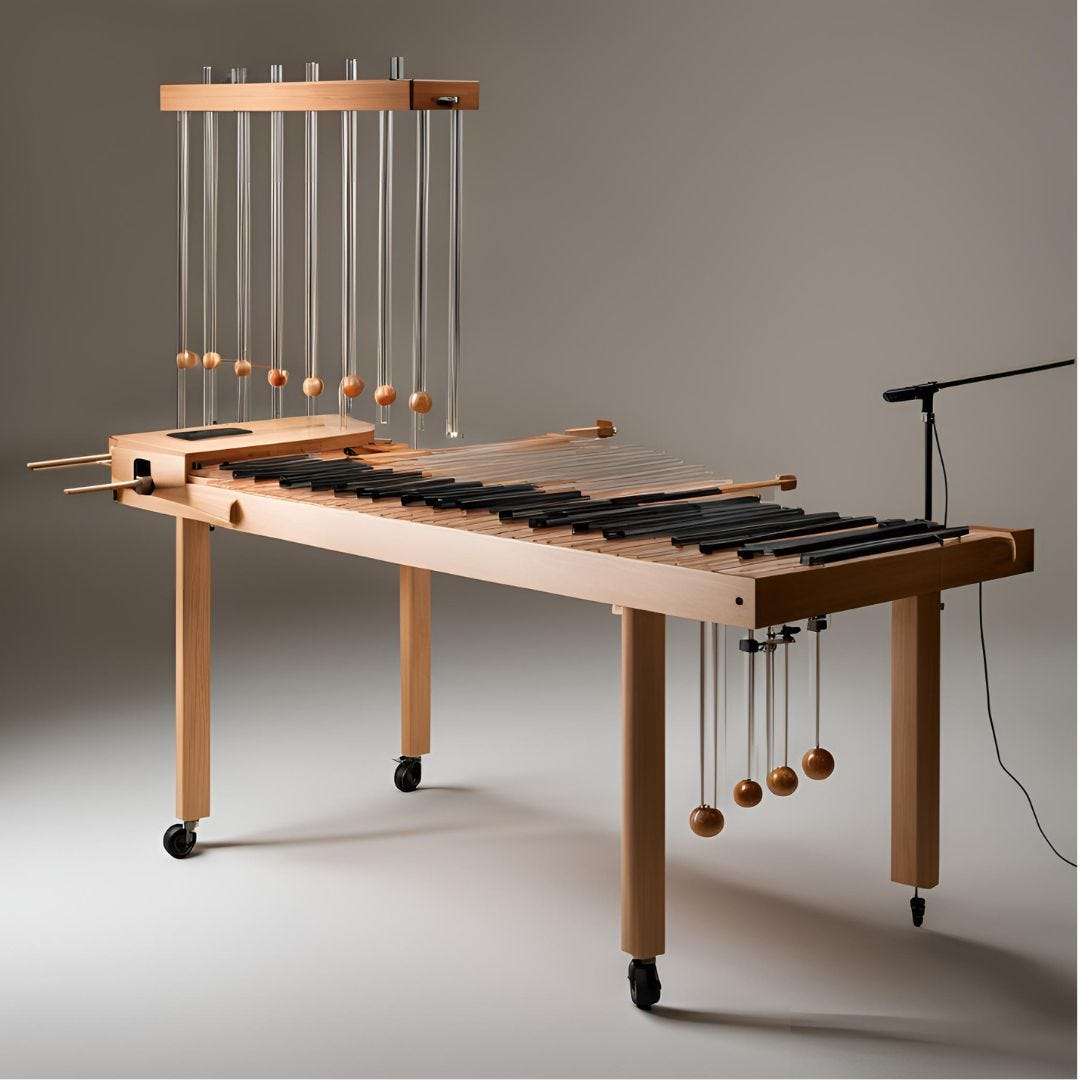
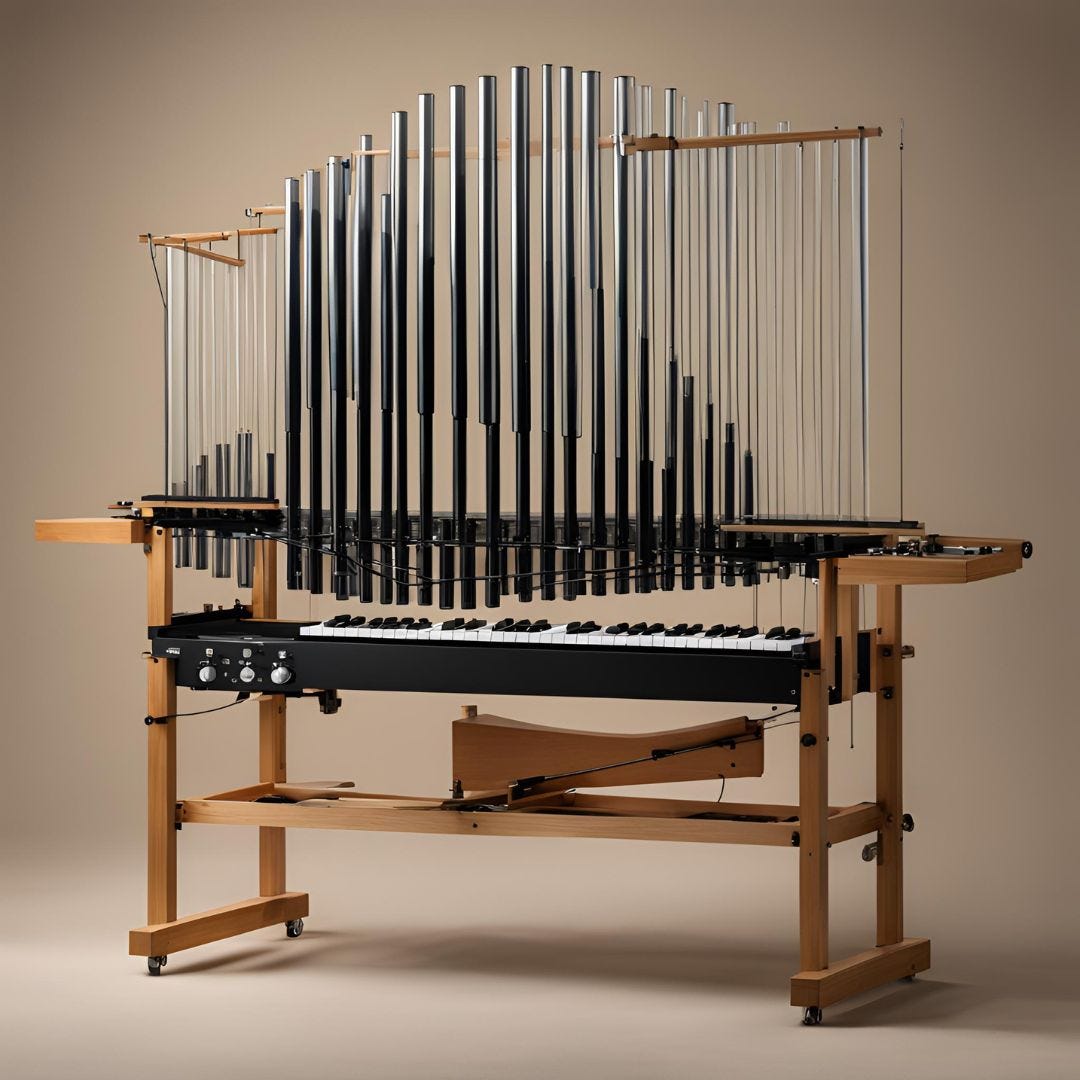
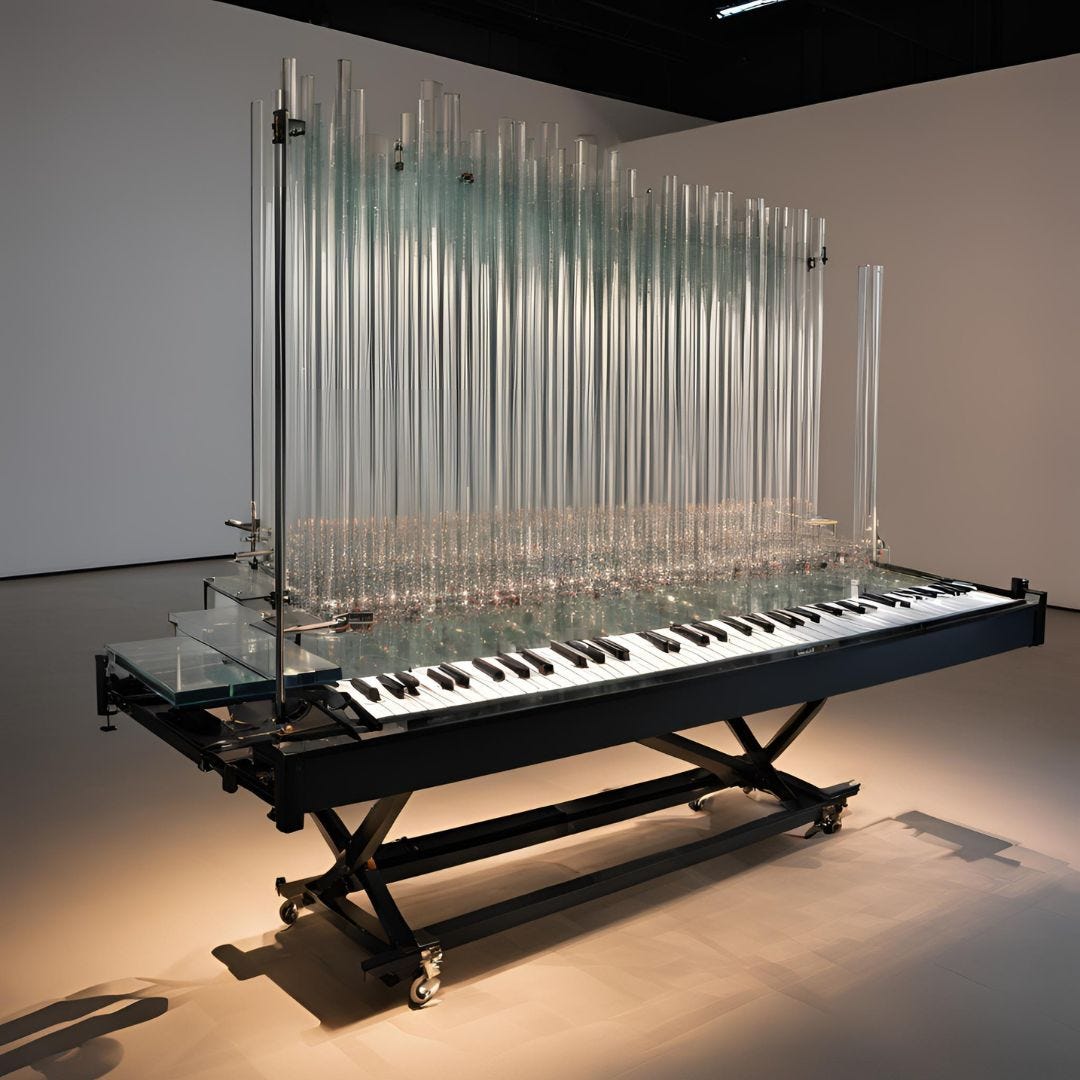
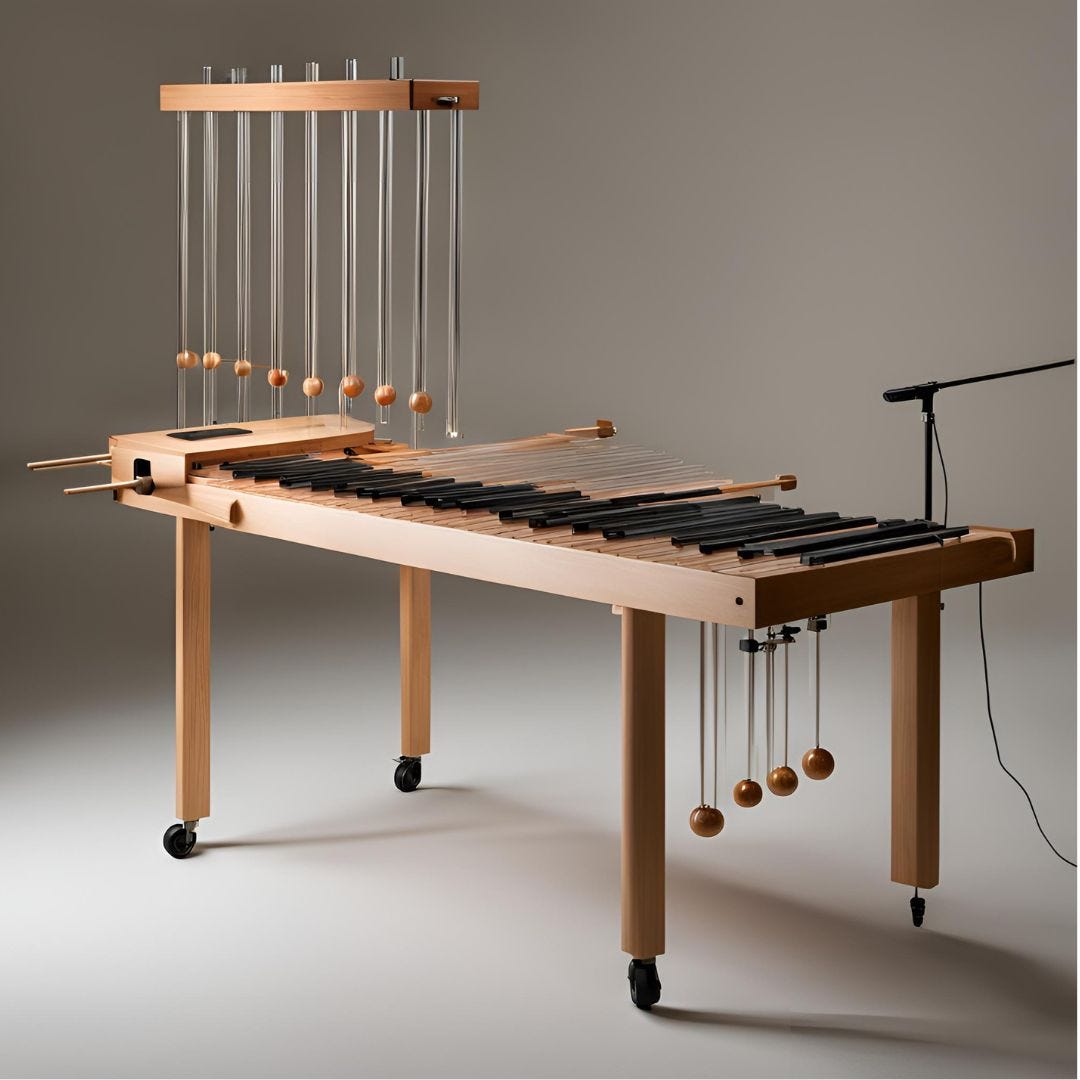
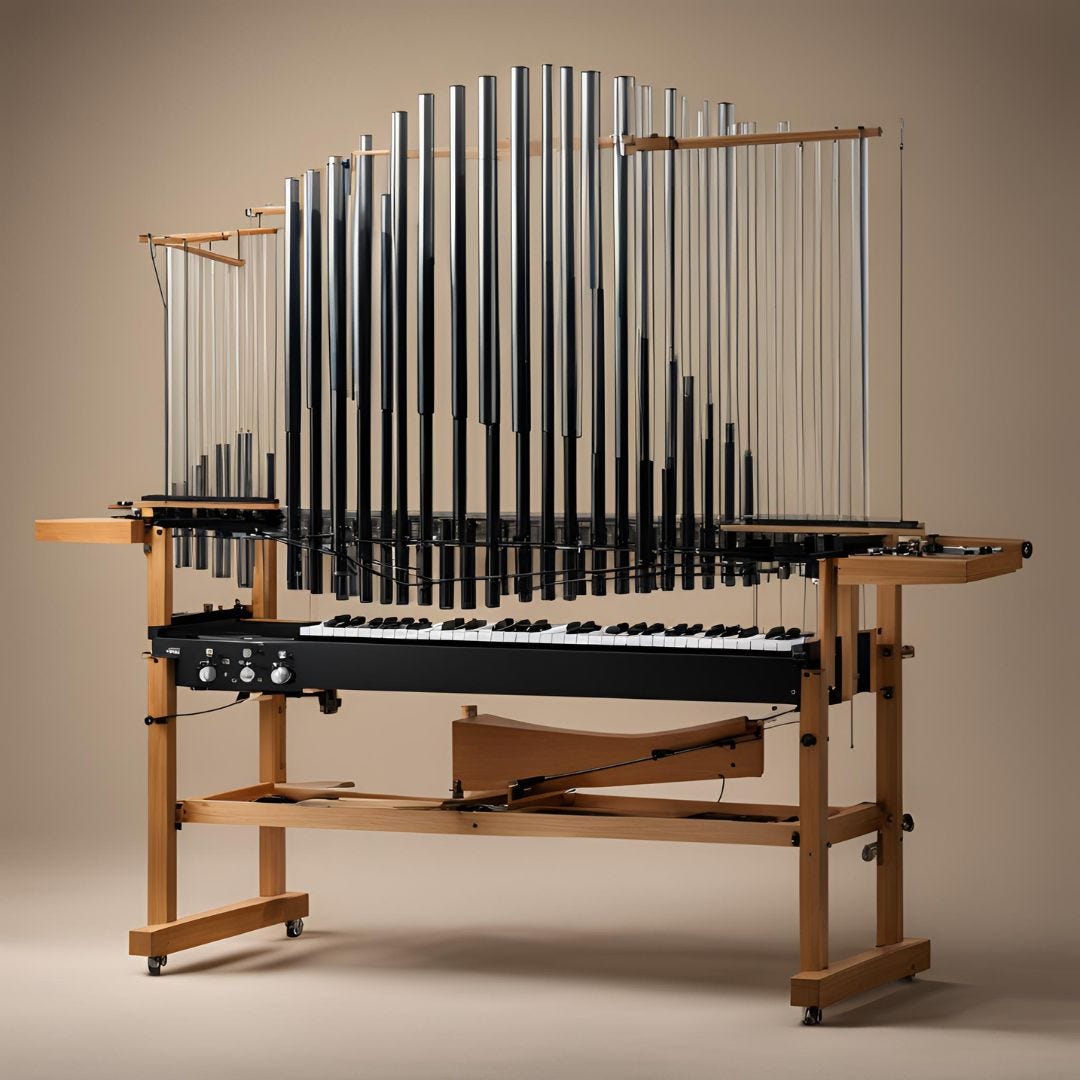
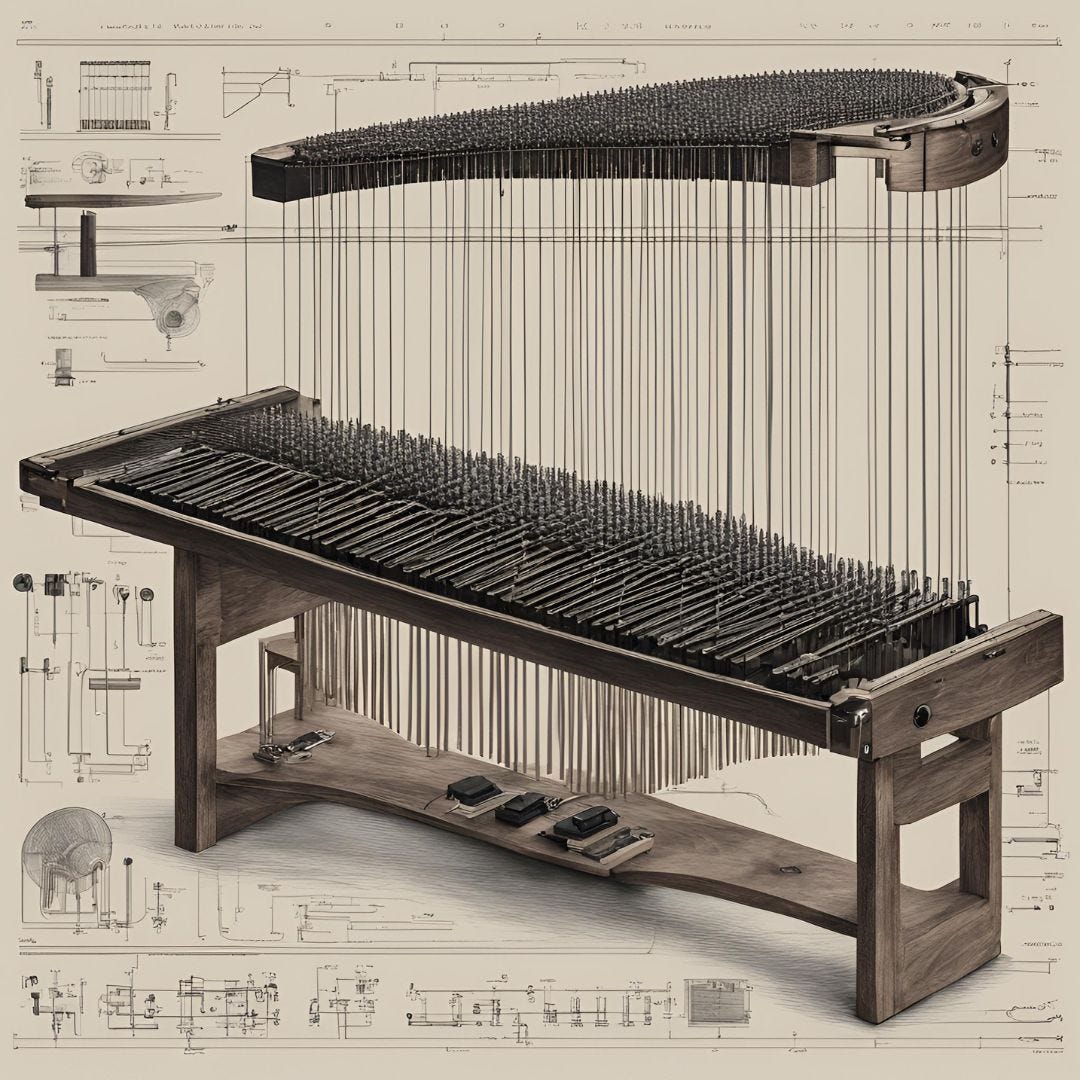
But I want to suggest a different application: make an instrument that the world has never seen before, and that suits your expressive needs exactly. For example, I’ve always wanted to hear a mallet-like instrument, like a marimba, but made of some material harder than wood, so it rings out brighter and more clearly. But I want it to play a full 5 voice chord with the press of a single note. Each chords quality is determined by the master key of the session, so nothing sounds out of tune. I also want these chords to be strummed like a guitar (this would be impossible on a marimba, obviously), and occasionally I want some grace notes in the top voice to allow for subtle melodies to emerge from these strummed chords. So, now we have something like that behaves like an electronic harp, but sounds like a glass mallet instrument. Wouldn’t it be interesting, too if when the key was pressed harder, the notes would flutter a bit or their pitches would bend? Or maybe 20% of the time, a single note, drifts up to the octave above in a slow glissando.
Toward a New Creative Paradigm
Ableton Live 12’s MIDI tools represent more than a technological upgrade—they signal a philosophical shift. By empowering producers to become curators and collaborators, these tools inspire new forms of music-making and challenge traditional notions of authorship.
So, here’s the invitation: dream up the instrument you’ve always wanted, and then let these tools help you bring it to life. After all, the frontier of electronic music isn’t just about what machines can do—it’s about what we can imagine.
What I’m Listening To
10 new songs - updated weekly
Items of interest
The cover image for this issue was created by an AI image generator. I made a prompt based on the theoretical instrument mentioned above and it gave me that beautiful diagram. Here are some less cool variations.