
on taste
cultivating artistic perspective with Thibault Flandin

Outside of music, I’ve spent years in the wine world as a sommelier and wine educator. At its core, tasting wine is about training your sensory apparatus to detect subtlety and nuance. It requires both a deep grounding in knowledge and the ability to suspend judgment, to fully experience what’s in front of you without preconception.
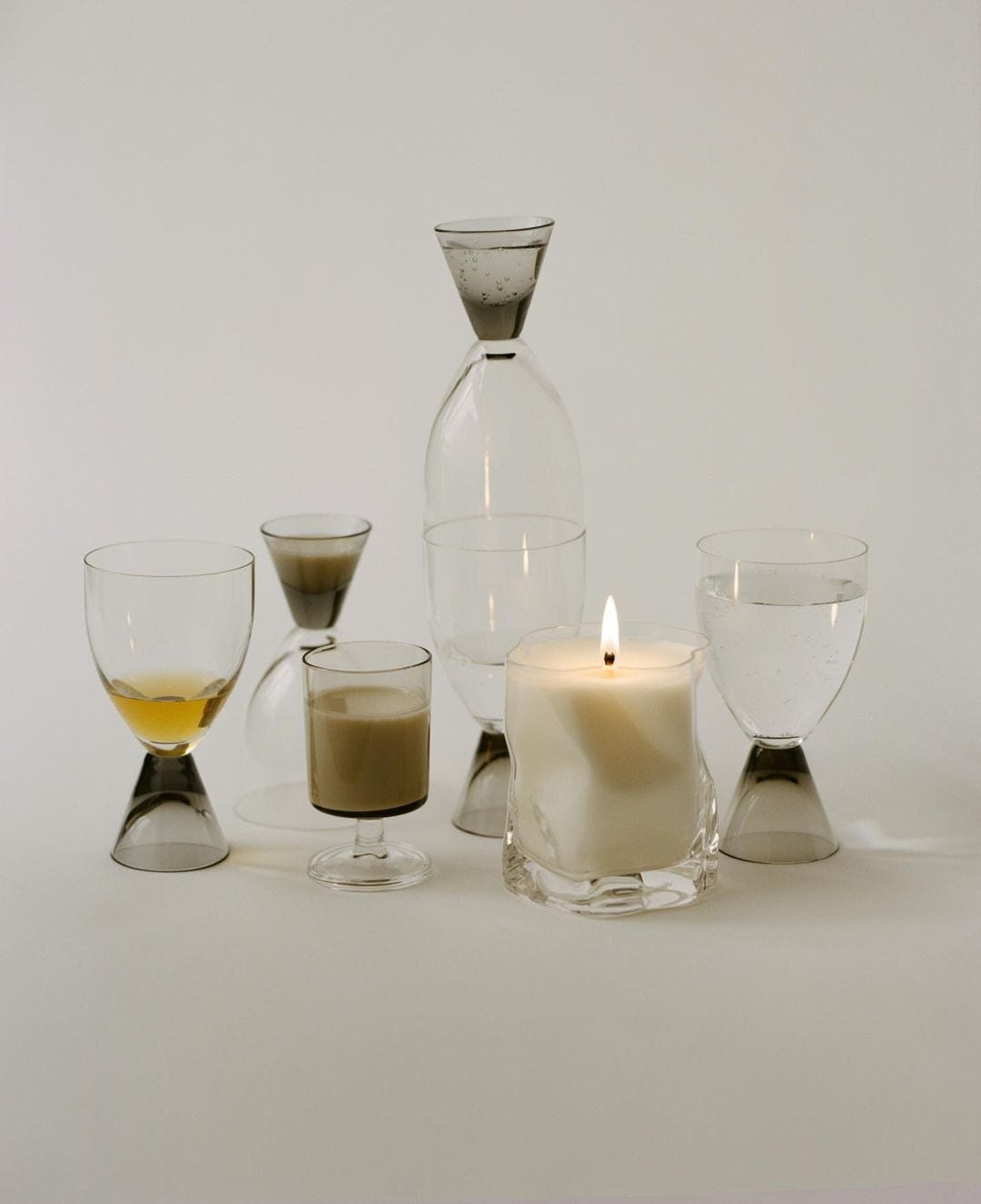
There is also a contextual dynamic to taste and tasting. All tasting experiences are abstract and entirely subjective. And yet, general consensuses might emerge among those who’ve tasted a lot of wine about about quality and character. Those with lots of tasting experience find different things interesting or novel than those with little tasting experience. Neither’s subjective experience is more valid than the other, but they are definitely different. Every time I taste a wine, the sensory information I get from it becomes part of a matrix of data I’ve been building since I began tasting. It is within this web of interconnecting information that I find my opinions about what a wine is, whether I like it, how much I’d pay for it, and whether I’d recommend it to someone else based assumptions I make about the size and shape of their matrix of sensory data.
Then there’s the matter of communication: turning a fundamentally subjective experience into something articulate and relatable to others. To describe a wine to someone else is to confront the miserable inadequacy of language, and to try, nevertheless, to connect.
Thinking about taste in this way—as a personal practice, a contextual field, and a mode of communication—has profoundly influenced how I approach art. My taste in wine is “good” because I’ve spent years tasting, observing, and reflecting. The same is true in any other aesthetic realm: the more art you consume thoughtfully, the sharper your taste becomes, and the more confident your choices as an artist, because you can better understand where they fit in a broader context.
To enrich this discussion, I reached out to my friend Thibault Flandin, a producer, writer and designer based in Bordeaux, France. Thibault brings a perspective shaped by his love of music, philosophy, literature and food. Together, we considered how taste serves as both a compass and a craft, helping artists refine their vision.
The Recipe
Taste isn’t simply about preference—it is more a matter of discernment. It’s the instinct that guides the countless small decisions that make up a piece of art: the choice of a sound, the structure of a melody, the tone of a lyric. These decisions shape not only your work but your identity as an artist.
Thibault describes taste as “a dynamic framework. It’s shaped by your experiences, the art you consume, and the questions you ask. It evolves as you do, but at its core, it reflects your unique way of perceiving the world.” Your ears carry a world of contextual biases based on your personal history of aural/emotional experiences.
What sets exceptional artists apart is their ability to refine and trust their taste. This doesn’t mean aiming for universal appeal; it means developing a clear perspective and allowing it to guide your work. The choices you make—what you include, what you leave out, how you balance the familiar with the unfamiliar—are what define your voice.
Cultivating taste comes from developing a sensibility that feels authentic to you. This process requires curiosity, patience, and a willingness to take risks.
The Ingredients
Developing taste—applying intentional discernment—is as much a discipline as it is an art. It grows with deliberate effort and focused attention. Here are three pillars to help you cultivate your taste and expand your creative perspective:
Exposure to Excellence
Your taste can only grow if you continually expand your exposure to exceptional work. Just as a chef seeks out rare ingredients or regional cuisines to sharpen their palate, artists and musicians should seek out unfamiliar and high-caliber influences.
For instance, photographers study the compositions of great masters like Robert Mapplethorpe or Cindy Sherman, not to mimic them but to understand the layers of intention behind their choices. Similarly, DJs often dig into obscure genres or decades-old tracks to find hidden gems that inject fresh energy into their sets.
In wine, tasting a Burgundy from a renowned vineyard can be transformative—it sets a benchmark for complexity and balance that stays with you. For a musician, listening to an intricate jazz improvisation or a perfectly crafted pop song can have the same effect. Seek the best, and let it challenge your perceptions of what’s possible.
Intentional Practice
Refining taste requires not just exposure but thoughtful engagement. It’s not enough to passively listen, look, or taste; you need to immerse yourself in the experience and reflect on it.
Thibault mentioned the example of chefs who practice “palate time,” tasting ingredients individually to understand their essence. Similarly, painters might spend hours studying how light interacts with a single object. For musicians, intentional practice could mean dissecting a track you admire: how is the melody structured? What role do the textures play? What decisions create its emotional impact?
Setting aside deliberate time each week for deep exploration—whether it’s listening to an unfamiliar album or experimenting with new techniques—builds a mental library of ideas and possibilities. The key is to approach it with curiosity and a willingness to learn.
Embracing Subjectivity
Taste is personal. A sommelier might love a bold, tannic red wine, while another prefers something softer and fruitier. Both are valid perspectives. The same holds true in art. Two sculptors might approach the same block of marble with entirely different visions—and both might create something extraordinary.
As a music maker, your taste is shaped by your preferences, experiences, and instincts. You don’t need to cater to trends or worry about universal appeal. What matters is that your work feels true to you. Embrace the subjectivity of your taste as a strength—it’s what gives your art its unique character.
In Practice
Refining your taste is an ongoing process that requires exposure and experimentation. Here’s how you can deepen your artistic sensibilities:
Seek the Unfamiliar
Familiarity can be a trap. Challenge yourself to explore music, art, and ideas outside your comfort zone. Thibault shared how he recently discovered early French synthesizer music from the 1970s, which opened up new possibilities for his own sound design.
Engage in Deep Listening
Dedicate time to truly engage with music. Block out distractions and focus on the details: the interplay of rhythm and melody, the texture of the sounds, the emotional arc of the arrangement.
Ask Reflective Questions
Develop the habit of self-interrogation. When something resonates with you, ask why. What choices did the artist make? How might you adapt or subvert those ideas in your own work?
Experiment Relentlessly
Taste grows through practice. Borrow elements from new influences and experiment with integrating them into your work. Even failed experiments expand your understanding of your preferences and instincts.
Cultivate a Dialogue
As with wine, taste in art thrives on conversation. Share your work, listen to feedback, and exchange ideas with other artists. These interactions can challenge and refine your sensibilities.
Creativity Moves Through You
My conversations with Thibault about taste led us to an anecdote from Elizabeth Gilbert. She talks about creativity as something bigger than any single artist. Ifor Gilbert, creative energy is a force that flows through us—a collaboration between our individuality and the vast reservoir of ideas, art, and culture that surrounds us. We are conduits, not sole creators.
This perspective reframes our role as artists. Our work is not born in isolation but shaped by what we encounter: the music we hear, the paintings we admire, the books we devour, and even the architecture of the streets we wander. When you visit a museum or immerse yourself in the works of the greats—whether it’s Caravaggio, Coltrane, or David Lynch—you’re not just consuming art; you’re allowing yourself to be influenced by the same creative currents that moved them.
No one creates in a vacuum. Artists witness magic in the world, translate it through their unique sensibilities, and send it back out as something new. Bach absorbed the sounds of his era and reinterpreted them into something timeless. Daft Punk took disco and funk and gave them a futuristic sheen. Every piece of art you create is part of this ongoing cycle, contributing to the collective flow of creativity that others will draw from.
So, take yourself on an artistic adventure. Go to the museum. Watch an experimental film. Lose yourself in a novel, or listen to music that challenges your ear. Step outside of your usual creative boundaries and let the world leave its mark on you.
Because creativity doesn’t come from within—it moves through us all. Your job is to remain open, curious, and ready to translate the magic you encounter into something only you can make.
You can find Thibault writing about creativity and technology on Threads at @tiboflandin