
please consider extreme art
radical truth-telling with Homer Hill


Welcome back, friends.
The release I originally planned for today focused on human elements in electronic music. I was going to talk about digitizing the human and humanizing the digital, then I was going to show you an original piece I have planned for an upcoming release. All that can wait until next week, however, because once again, my friend Homer jumped into my inbox with a fully formed essay, carefully crafted for readers of this letter. Personally, this essay could not have come at a better time for me.
As I navigate this Open Studio project I’m constantly having to come to terms with how to produce work—written, musical and video—that resonates for the right reasons. Learning to build a business online has led me into a number of spooky digital spaces within our attentional economy with questionable ethics. I am constantly wrestling with the tension between creating ‘engaging content’ and wanting to critique the very system that incentivizes ‘engagement.’ I think about institutional critique for the online business world, but then I find myself googling: ‘eye-catching YouTube thumbnail templates’ and I want to crawl into a hole.
I have this suspicion that—with our media structured as it is—counterculture is going extinct. As the world moves towards ‘creative entrepreneurship’ the possibilities that art might have a radicalizing effect on the populace diminishes. Look no further than the wide adoption of Rick Rubin’s book “The Creative Act” in the startup world. Artists should be able to make a living doing creative things (the entire point of this channel), and yet, to do so requires treating all creative work like a business. The would-be famous artists of our time are more likely working in the fields of design, PR, curation and creative direction. Either that, or they’re grandfathered into an industry cohort whose gates are growing ever taller.
(In Defense of Amateurism takes up some of these issues in more detail)
Pop music has always existed to enfranchise a mass market, but I can hear it now more than ever. I’m not talking about music that is just fully made by AI based on user data mined from Spotify. I’m talking about figures like the Chainsmokers, John Summit, and Kaskade, all of whom are certainly competent artists, but who have no apparent interest in disrupting the status quo, musically or culturally. Their tracks might as well be crafted by machines based on user data; optimized to grab attention in advertisements and social media, and take that attention straight to massive festival stages in Las Vegas. They bypass, the local, the participatory and the IRL in favor of a kind of globalist EDM mega-product.
All of this—the looming loss of counterculture, the incentives of the attention economy, the fact that EDM bros have taken over electronic music (and maybe also our government?)—swirls in my brain every time I sit down to work. So, when my oldest friend wants me to read about why he likes crust punk and Vito Acconci, I feel a certain kind of calm.
Here’s Homer Hill:

An obvious but equally important recurring theme in this newsletter is the observation that creativity is often stifled by the market. Artists, in their pursuit of a sustainable career, are frequently forced to create with a primary focus on palatability and profit. While this might ensure financial security, it risks draining their work of honesty, subversion, and personal catharsis. Extreme art—the kind that is never marketable, often abrasive, and frequently misunderstood—offers something beyond conventional artistic success: the freedom to be entirely and unapologetically honest. Extreme art may be misguided, reactionary, or offensive, but it is never censored by economic viability. For artists facing a creative impasse, embracing extreme art can be an essential step toward rediscovering their voice.
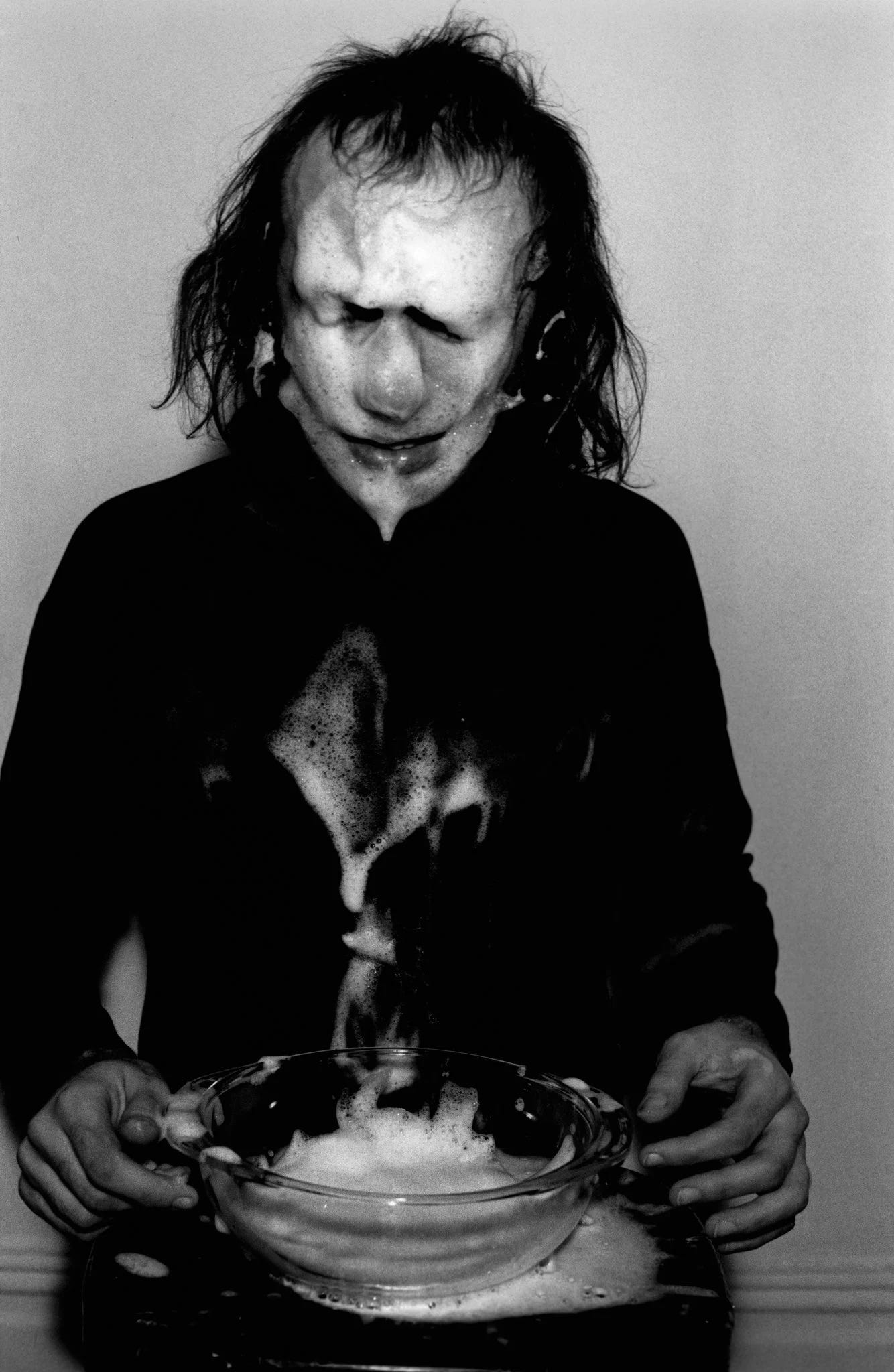
I speak from experience. As a teenager, I gravitated toward extreme music, particularly street punk, hardcore and crust punk. My love for these genres was more than just a taste in sound—it was the culmination of my early exposure to counter cultural political theory, my personal struggles, and an innate distrust of authority. The raw energy of these genres, their unapologetic stance against systemic oppression, and the unfiltered anger of their lyricism resonated with my sense of alienation. By the time I was sixteen, I had formulated a plan to move to Europe and live in squats, rejecting the world as it was presented to me. 9/11 and the Iraq War had shattered any illusions I may have had about the inherent goodness of those in power. In my mind, the only viable response was radicalism, and the soundtrack to my disillusionment was loud, abrasive, and confrontational.
However, by my early twenties, I had distanced myself from extreme music. I viewed my past love for these genres as a passing phase, a reflection of youthful discontent rather than a meaningful artistic engagement. I no longer felt the same immediate alienation, and I mistakenly assumed that my need for extreme expression had faded with time. Like many young people, I equated personal growth with moving on from the anger of my teenage years. Extreme music, I thought, had served its purpose in my life, and I no longer needed it.
But now, as a non-twenty-something (sell out yuppie scum by my teenself's standards), I find myself returning to extreme music with a deeper, more profound love for it—one that goes beyond nostalgia. The intensity of crust punk, death metal, and other extreme genres speaks to something more enduring than adolescent rebellion. These genres are, at their core, a form of extreme artistic expression that refuses to conform. The musicians who dedicate themselves to these styles are making art that is technically demanding, emotionally raw, and, above all, commercially unviable. That, in itself, is remarkable.
This realization has led me to an important conclusion: artists of all kinds should seriously consider extreme art, especially when facing creative stagnation. Extreme art is a space where raw ideas can be explored without the constraints of marketability. It exists beyond the boundaries of what is deemed socially acceptable, aesthetically pleasing, or financially viable. That makes it one of the last truly free forms of expression.

Artists experiencing creative block often struggle because they are attempting to create within a framework that demands palatability. They overthink their audience, their potential success, and whether their work will be received well. But extreme art forces you to abandon those concerns. It allows for experimentation without expectation, which is often where the most profound creative breakthroughs occur. It may not be what you ultimately choose to produce in the long term, but it can serve as an essential phase of artistic exploration.
One of the most significant aspects of extreme art is its honesty. It does not attempt to cater to trends or consumer preferences. It exists because the people making it feel compelled to create it. Whether it’s a crust punk band playing music that will never see mainstream recognition or a painter working in grotesque, unsettling imagery, extreme artists are producing work that is deeply personal and unfiltered. And even though extreme art is often dismissed as a phase or an amateur endeavor, its value extends far beyond youthful rebellion. Its unflinching nature ensures that it remains relevant for those who seek truth in art, regardless of age or life stage.
The career trajectory of artist Vito Acconci is a striking example of how extreme art can carve out a lasting artistic legacy. Acconci first made his name through radical performance and video art, most notoriously by narrating his own masturbation under a table in Seedbed. His early work was confrontational, transgressive, and deeply personal, earning him recognition and respect in the art world. Yet, as time went on, he moved into architecture and landscape design, producing work that, while competent, completely lacked the raw intensity of his early years. His name persisted because of the extreme art he once created, not because of his later, safer endeavors. This pattern serves as a cautionary tale: the moment artists begin to cater to external expectations rather than their own uninhibited instincts, their work risks losing its vitality.
For me, extreme music is no longer just about anger; it is about artistic integrity. I listen to it now not because I am the same alienated teenager I once was, but because it represents something rare: a refusal to compromise. And that is precisely why all artists—regardless of medium—should consider diving into the extreme. Whether they stay there or move on, the act of engaging with something so raw and unfiltered can only strengthen their creative practice.
So to any artist struggling to find their voice, I offer this advice: step into the extreme. Make the art that no one will buy, that no one will hang in a gallery, that no one will understand. Scream into the void. You might find something there that no market-driven creation could ever give you—truth.
 | A guest post by
|